
After college, I worked as an AmeriCorps volunteer in Rochester, New York. My friends and I spent a lot of time at dive bars, namely one where we could spin a wheel to win cheap beer and hog the jukebox all night with our laundry quarters. We talked about anything and everything, and one night, on the rousing topic of job hunting, my friend Jon said this:
“When you’re interviewing for jobs, don’t only talk about work,” he said. “That makes you one-dimensional, and that makes you hard to see.”
I was speechless. What a thing to say! The way it transitions so seamlessly from literal to figurative to a double entendre–pure poetry!
That was 14 years ago, and I still think it’s brilliant. It’s also proven to be applicable outside of job interviews: namely, in writing.
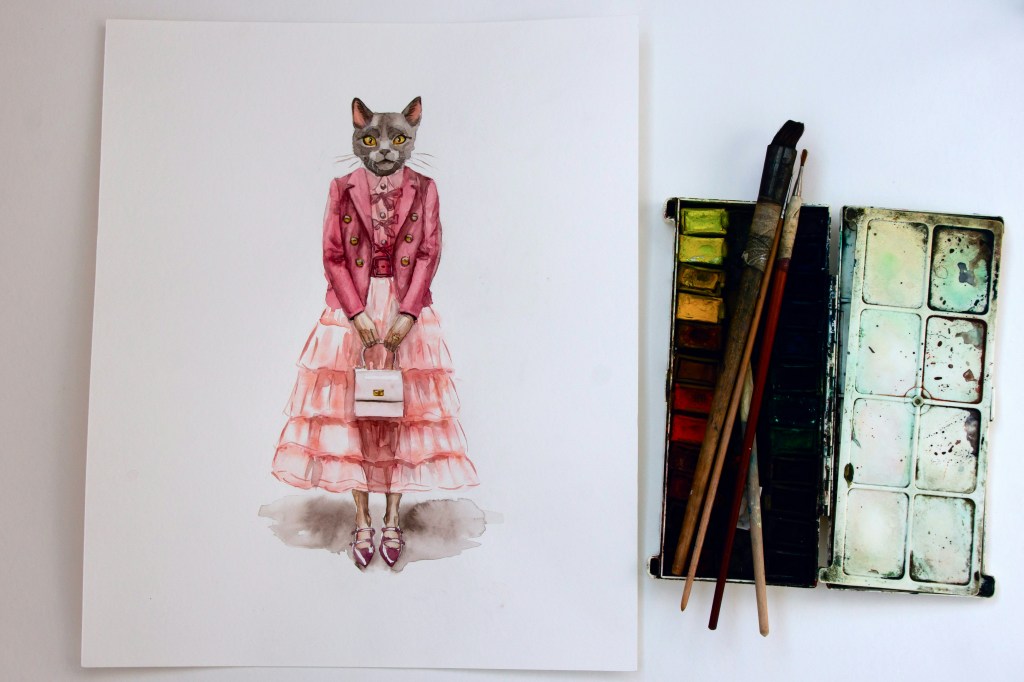
Writers who only showcase one interest, one skillset–they are like a paper doll turned sideways. They are hard to see.
So many nonfiction books and essays and blog posts out there are informative and technically sound. But many lack a certain dimensionality. Many have paper-doll authors that readers don’t connect to, because they can’t “see” them.
Many have a sort of forced jokiness, a shallow “see? I’m like you” camaraderie, or a contrived, posturing tone.
But readers pick up on intention, and in these cases it’s obvious that the author was attempting to make a human connection without actually showing their humanity.
If you’re writing anything more advanced than board-game instructions, I hope you’ll let your real self peek through, just a little.
Maybe that means allowing your sarcasm to cut through. Or telling a personal anecdote with real detail. Or describing the room you’re in, how your body feels, or what you really think, not what you think you should think.
These things make you easier to see as a real, whole person. And readers connect with real, whole people.
(This is one reason AI will never replace writing in any meaningful way.)
It’s the unexpected details, our quirks and our surprises, our authentic point of view, that makes us visible and accessible to each other.
Of course, this has to be done intentionally.
Sometimes this tip is most useful during the draft-writing stage. Let the first draft be colorful and personal and rife with specific details. You might edit most of it out in the next round, or you might not. Either way, chances are it’ll make for a more interesting and textured final draft–one where you can truly be seen.
Or maybe your writing would benefit by a more personal POV overall, even if your subject is highly technical. This is a great way to find or fine-tune your writing voice. It’s worth experimenting to find out.
That’s one of the best things about writing, in my opinion–you can play around as much as you want. Your drafts can be as weird and experimental as humanly possible, and you’ll almost always come out the other side having learned something–about yourself, and/or about your subject.
If you want to add more dimension and voice to your writing, but aren’t sure how, get in touch. A writing coach can help you deepen and expand your writing using this technique and many others.
If you’d rather send me a message than talk face-to-face, you can do that on LinkedIn.
Happy writing!
 Kimberly Bunker, MFA
Leave a comment