
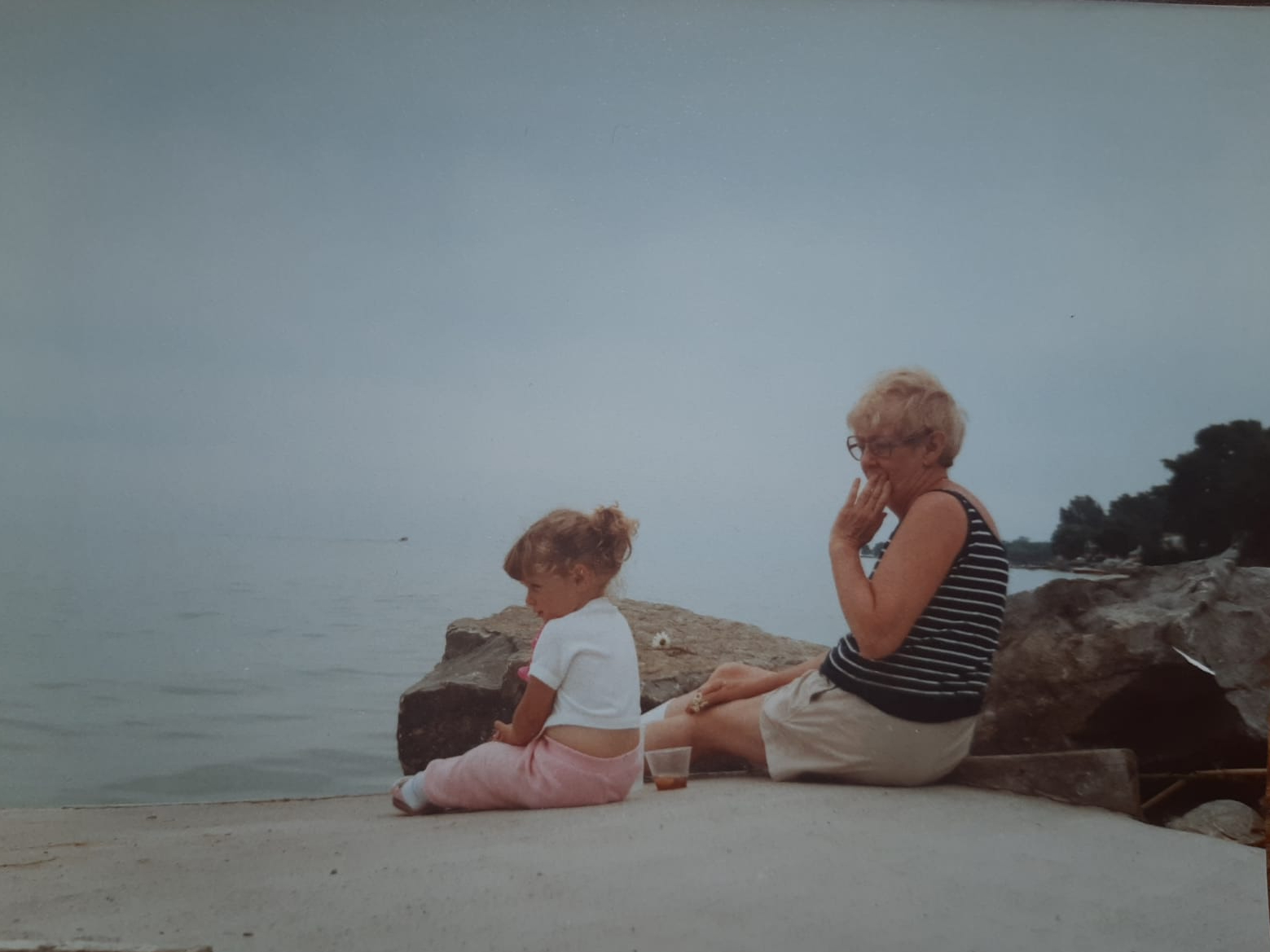
“I want to write about my childhood, but I don’t remember all the details,” a client said to me once. “How can I write a memoir if my memory is spotty?”
This is a common doubt, and one that stops people from writing about their lives.
If their memory isn’t perfect, they believe, they’re somehow disqualified from writing their memoir.
Or, if they do write it, they believe they’re limited to vague, detail-less montages.
It’s a valid concern.
How do you write about an event meaningfully for yourself, and vividly for the reader, if most of the details have faded?
How do you fill in the blanks?
✨
Listen:
It’s okay if not every detail is literally true.
What matters isn’t the exact dialogue, or the precise color of the wall, or even the exact month or year.
What matters is the *emotional truth.*
What matters is your experience of it, *now* as much as then. Your imperfect, biased, hole-y memory of it.
✨
A memoir is not a record of what happened. It is not a fossil.
It’s the story of what happened, as you look back on it now.
Tristine Rainer, author of Your Life As Story (a must-read for any memoirist), writes that looking back on our lives, “is richer, more complex, poignant, and resonant than memory.”
Memoir-writing entails not only remembering, but “mixing memory with imagination.”
That’s what makes it memoir: imagining your past, in order to convey the emotional truth.


If you could use some support and guidance as you mix memory with imagination on the page, schedule a call with me here.
I’m booking coaching and ghostwriting clients for late 2026 and 2027. If we’re a good fit during our first conversation, I’d love to save you a slot.
Leave a Reply